For larger text, use “Read or print.”
Silhouette
An original fashion appearance image, numbered feature notes and exact digital swatches lead to a conditional physical-sample request.
Design study · 4 slides
Using Claude Code or Codex? Install the free presentation skill.
Source and instructions
Source notes
SILHOUETTE / Frozen fictional art-direction brief
Purpose: present a proposed wrap-coat visual direction and ask to commission one physical sample only once fabric choice and sample budget are approved.
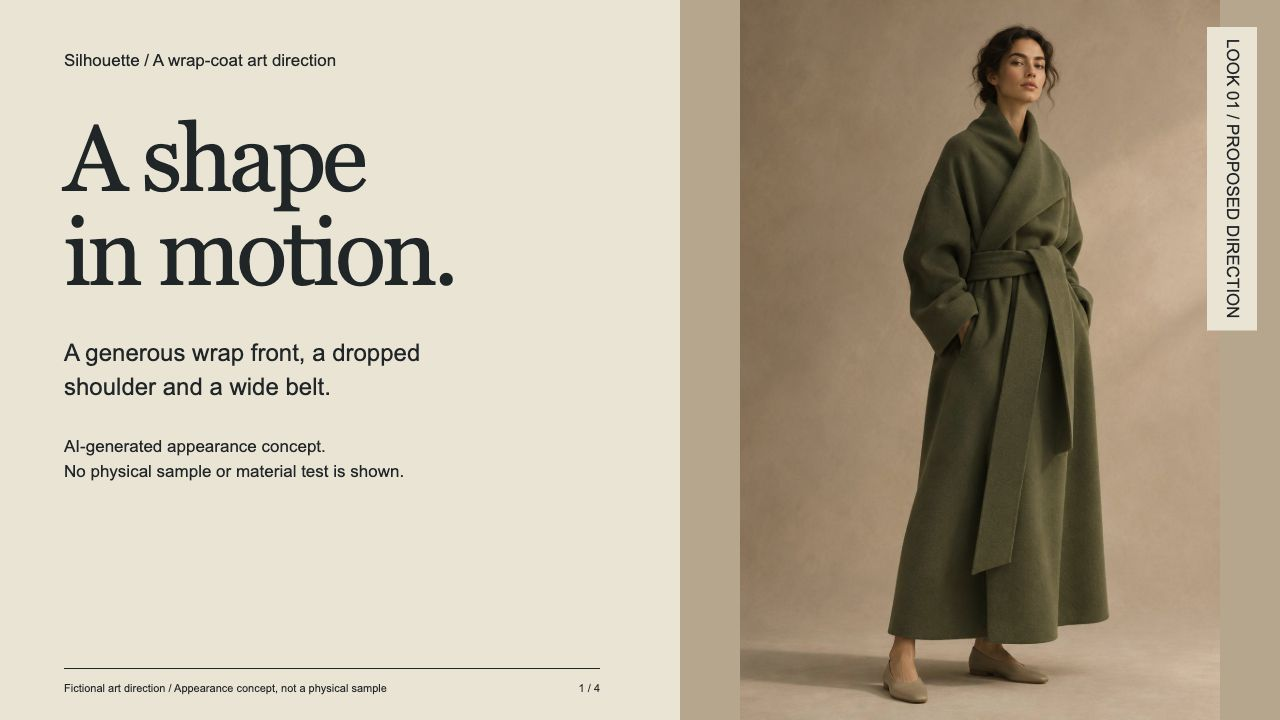
The garment is proposed, not manufactured or available for sale. Three intended appearance features: generous wrap front, dropped shoulder, wide belt.
Proposed palette: Chalk #eee7d9; Moss #718061; Ink #222a2c. Equal swatches are palette options, not quantities or proportions of a collection. A generated image may suggest appearance; it does not validate physical color or any feature's construction.
No fabric composition, fabric weight, size range, measurements, manufacturer, cost, launch date or completed fit test is supplied.
Open sample checks: fabric behavior, fit and construction. The image is an original AI-generated editorial appearance concept, not a photograph of an actual sample, garment specification, sewing pattern or proof of material behavior.
Ask: commission one physical sample after fabric and sample budget approval. Neither approval is supplied. No production, sales or launch approval is requested.
Four-slide authored visual study, not an unedited output of a released recipe or a real fashion brand campaign.
Design instructions
Silhouette: an editorial fashion-lookbook language with warm chalk #eee7d9, moss #718061 and ink #222a2c. Use a full-height appearance plate and quiet large Georgia title column, then carry look-number rails and plate identifiers through every interior. Build a labelled contact sheet of detail crops from the same authorized image, garment-shaped digital palette specimens with opaque readable labels, and a numbered sample ticket beside the outstanding checks. Each shape is schematic, not a pattern or verified construction. Give palette options equal specimens with exact source color labels; do not imply quantities or verified physical color. End on the sample decision and the checks still required. Preserve a supplied brand palette and garment brief rather than inheriting this coat or colors. If generation is available and optional concept imagery is appropriate, create an original editorial garment appearance, disclose that it is generated, compress/embed it and retain the source/prompt. Do not infer construction, fabric blend, fit, sizing, measurements or availability from a mood image. Without generation or supplied imagery, use a complete labelled native shape-and-feature composition, not a blank image box; make schematic limits explicit and retain all palette, feature and sample conditions. A native silhouette is not a cutting pattern. Specifically required documentary sample photography remains a dependency. Keep concept, approved sample and saleable product distinct; do not invent production results.

Use my supplied content and the format I requested. Keep its facts, numbers, denominators, uncertainty and conclusion. Do not inherit the example deck’s story, figures or recommendation. The visual direction guides design; the audience and argument determine the slide sequence.

Check the tools available in this session. When an image would improve the presentation and a suitable generation tool is available, generate an original image or use an asset I am authorized to supply. If optional generation is unavailable or fails, continue with a complete image-free composition. Reclaim the space, leave no placeholders, and do not ask me to enable a tool or delay the deck for optional imagery. Mention a failure in the handoff rather than on audience-facing slides. If I explicitly require a particular image, preserve that requirement and explain any unmet dependency.

Keep text and evidence selectable. For HTML, use one self-contained static document with embedded CSS, compressed data images and licensed embedded fonts when needed; do not add scripts, forms, remote calls or authored slide controls. Preserve font licenses and asset provenance. Label conceptual or generated imagery when it could be mistaken for real product, customer or event evidence. Never invent a product screenshot to prove a feature.

Render every slide and inspect the actual result before handing it over. Check crop, contrast, type hierarchy, labels, overflow and source fidelity. Use at least 4.5:1 contrast for body text and 3:1 for large text. Check the destination’s file/data-image limits before any separately authorized publication. If visual checking is unavailable, say so in the handoff.About this design study
Four slides carry a fictional wrap-coat art direction, three proposed appearance features and palette options, with fabric, fit and construction still untested. Independently authored fictional art-direction study using an original AI-generated model and garment appearance. It is not a real sample photograph, sewing pattern, material or fit test, physical color proof, available product or production approval.