The Larkspur retail results brief
Board minutes keep the sales decline and channel exclusions with the headline figure.
Worked example
Source and instructions
Design instructions
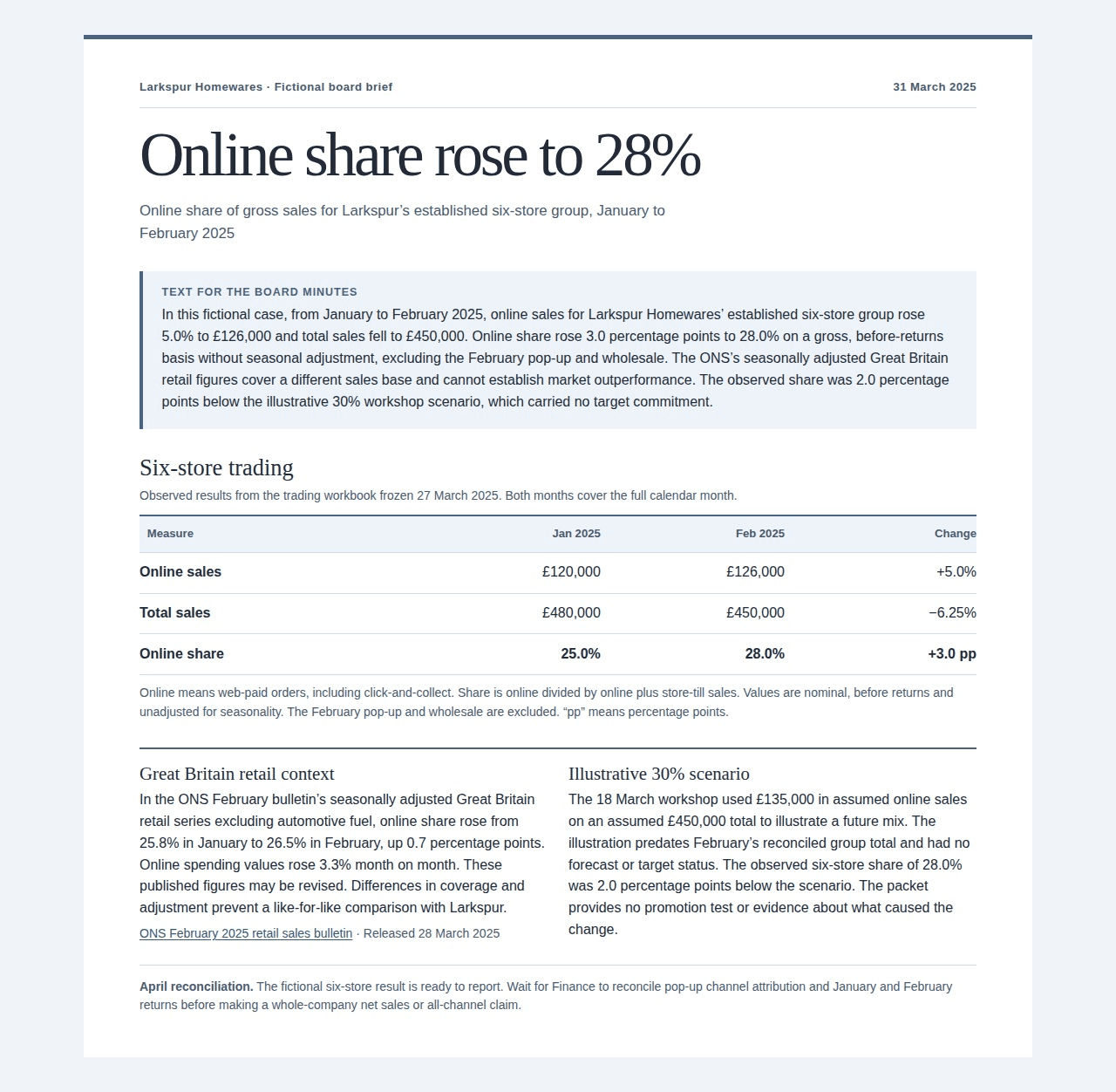
Use Georgia headings, dark blue type and quiet horizontal rules. Set the main finding in a large serif heading with a one-line scope note. Place the reusable summary in a lightly shaded panel and align numbers across reporting periods in a compact table. Give market context and planning assumptions short headings.

Image fallback: Use native text, table and rules. Keep the figures and period labels selectable.Write a results brief
Copy these instructions with your own source material to keep qualifications with the figures.
Lead with the finding. Identify the measure, population and period. Put material uncertainty beside the result it affects.

When a report mixes measurements, benchmarks, and illustrations, identify the evidence role wherever a figure can be reused on its own. Keep the inputs’ qualifications with derived figures too, including in a standalone caption or status line.Source notes
Larkspur Homewares · board brief
- Fictional retailer and trading figures. The same six stores are covered for January and February 2025.
- Online sales rose from £120,000 to £126,000 while total sales fell from £480,000 to £450,000. Online share rose from 25% to 28%.
- The figures are gross before returns, with no seasonal adjustment, and exclude the February pop-up and wholesale.
- The ONS February 2025 bulletin supplies historical market context for a different sales base. The board has no comparable measure of outperformance.
- The workshop’s 30% was an illustration. Finance needs to reconcile returns and pop-up attribution before broader claims.
About this example
Codex produced this report with the tested results guidance. Its board paragraph performed best for detached reuse in the blind comparison. The gallery version identifies the fictional case in the opening and in the board paragraph.